Ever stood in a wave pool and wondered how those perfectly timed waves keep rolling in, just like the ocean? It might feel like magic, but behind that fun, beach-like experience lies some fascinating engineering and science. Wave pools are one of the most loved attractions in water parks because they recreate the rhythm and excitement of the sea—without ever leaving the city.
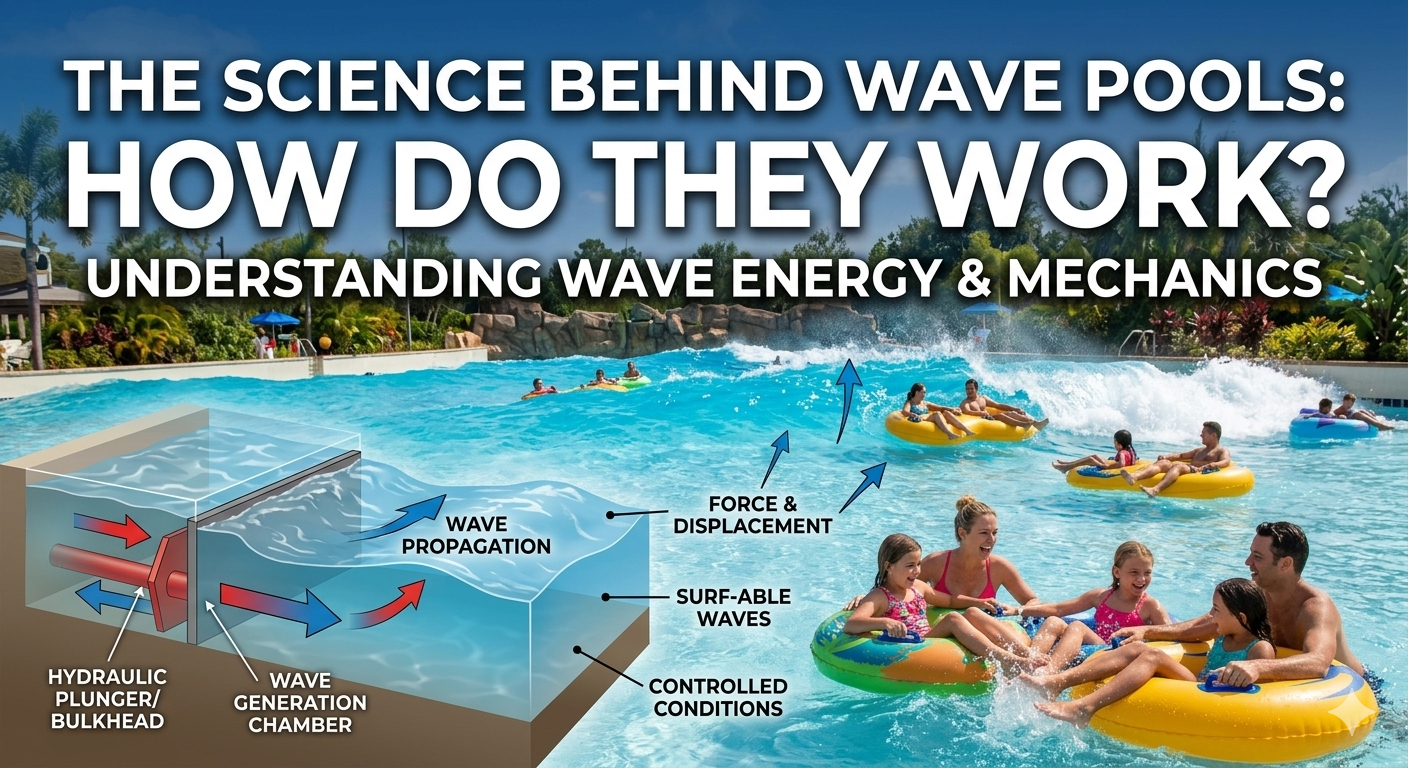
At the heart of every wave pool is a powerful mechanical system designed to move large volumes of water in a controlled way. Unlike natural oceans where wind creates waves, wave pools rely on machines to generate that motion. The most common method uses large chambers or tanks located behind the pool. These chambers fill with water and air, and when pressure is suddenly released, water rushes out into the pool, creating waves that travel across the surface. This process repeats in cycles, giving you those consistent, rolling waves you feel.
Some advanced wave pools use giant paddles or hydraulic systems instead of air pressure. These paddles push water forward in a rhythmic motion, similar to how waves naturally form in the ocean. By adjusting speed and force, operators can control the size and intensity of the waves—ranging from gentle ripples perfect for kids to stronger waves that add excitement for adults.
Another interesting part of the science is how the pool is designed. Wave pools are usually built with a sloped floor, just like a natural beach. This allows waves to grow as they move forward and then gradually break, creating that realistic seaside effect. The shape and depth of the pool play a big role in how the waves behave, ensuring they are both fun and safe for everyone.
Timing and synchronization are also crucial. The machines generating the waves are carefully programmed to release energy at regular intervals, creating a pattern that feels natural rather than random. This is why you’ll often notice waves coming in sets, giving people time to enjoy, relax, and prepare for the next round.
Safety is an important part of the design as well. Wave strength is controlled to ensure it stays within safe limits, and lifeguards are always present to monitor activity. The gradual increase and decrease in wave intensity also help prevent sudden surprises, making the experience enjoyable for all age groups.
What makes wave pools truly special is how they combine science with entertainment. They take complex engineering concepts—like fluid dynamics, air pressure, and motion control—and turn them into something simple and joyful. For visitors, it’s just about jumping into the water and enjoying the waves, but behind the scenes, it’s a carefully designed system working perfectly to create that experience.
In the end, wave pools are a perfect example of how technology can recreate nature in a safe and controlled environment. So the next time you’re floating in one, enjoying the rise and fall of the water, you’ll know there’s a whole world of science making those waves come to life. 🌊